Thinking Outside the Box
In education, “thinking outside the box” means encouraging students to approach problems and concepts with creativity, unconventional thinking, and a willingness to explore new perspectives, moving beyond traditional or expected solutions.
Thinking outside the box for a learner with a learning disability (LD) means adapting teaching methods and environments in creative, flexible ways that emphasize strengths and minimize barriers. Here are some nontraditional, outside-the-box ideas:
- The Equals Semi-formal Curriculum is set in the context of Equals multi-tiered curriculum approach, recognising that differentiation from England’s (or indeed any) National Curriculum is NOT sufficient to meet the needs of pupils and students with profound, complex, severe or global learning difficulties
- For these populations, who are all working consistently and over time below or very near the start of their national curriculum, curricula NEED TO be different rather than differentiated, because the way such pupils learn is different, and often very, very different from neuro-typical, conventional developing learners for whom the national curriculum was designed.
- Breadth and Balance. Whilst we accept the desirability of providing a broad and balanced curriculum, it must be wholly appropriate to the needs of each learner. Ongoing assessment may point to a need for concentration and intensity in one or two particular areas for some learners for a part, and sometimes a considerable part of their time in education.
- Effects of Trauma on Problem-Solving
Trauma and neglect can disrupt brain development, particularly in areas responsible for:
- Executive function (planning, focus, flexibility)
- Emotional regulation
- Working memory
This can lead to:
- Difficulty concentrating or persisting with tasks
- Fear-based responses to challenges (fight/flight/freeze)
- Reduced capacity for abstract thinking or trying new strategies
However, not all effects are negative.
- Adaptive, Outside-the-Box Thinking
Children who experience trauma often have to navigate unpredictable or unsafe environments, which may cultivate:
- Unconventional problem-solving: They may develop creative ways to meet their needs or avoid danger.
- Heightened situational awareness: This can make them sensitive to subtle cues others miss, supporting novel insights.
- Strong survival skills: These can translate into non-linear or resourceful thinking when emotionally safe.
- Key Conditions for Growth
To support these children in developing higher-level problem-solving skills:
- Safety and trust must be established first.
- Relationships with responsive adults help them co-regulate and feel safe exploring.
- Structured opportunities for creative thinking—like open-ended questions, storytelling, and play-based learning—encourage divergent thinking.
HOW
- Create a Safe and Predictable Environment
Traumatized children often operate in survival mode. Safety is the first step to unlock creative thinking.
- Use consistent routines and transitions.
- Offer clear expectations and visual schedules.
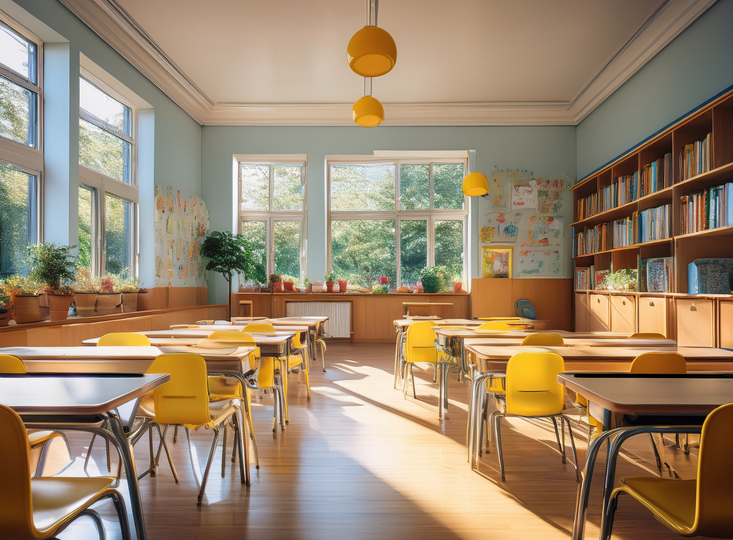
- Design a calm, welcoming physical space.
Why it works: Predictability reduces anxiety and allows the brain to engage in higher-level thinking.
- Build Strong, Trusting Relationships
Children need to feel emotionally secure to take creative risks.
- Greet them personally each day.
- Use co-regulation strategies (e.g., breathing together, grounding activities).
- Show curiosity and acceptance rather than judgment.
Why it works: Trust fosters a sense of belonging and lowers fear responses that block problem-solving.
- Use Open-Ended Play and Materials
Let students explore and create without strict directions.
- Offer loose parts (e.g., blocks, fabric, bottle caps) for building and storytelling.
- Use “What if?” scenarios in lessons (e.g., “What if we had to build a bridge out of paper?”).
- Encourage role-play or drama-based problem-solving.
Why it works: Open-ended tasks invite experimentation and allow students to lead with their imagination.
- Model and Teach Problem-Solving Skills
Break down the process explicitly using real-life or playful problems.
- Use visual organizers (e.g., problem–solution maps).
- Teach a step-by-step model: Identify the problem, brainstorm, try a solution, reflect.
- Praise effort and strategy, not just correct answers.
Why it works: Trauma can impair executive function. Teaching these steps builds cognitive structure.
- Encourage Storytelling and Personal Voice
Let students express ideas, feelings, and perspectives through creative outlets.
- Use drawing, journaling, comic strips, or digital stories.
- Ask, “How else could the story end?” or “What would you do if you were the character?”
Why it works: Storytelling provides emotional distance while nurturing perspective-taking and creative thinking.
- Scaffold Risk-Taking
Help students feel safe to make mistakes.
- Start with low-risk challenges (e.g., group puzzles or games).
- Celebrate “good tries” and highlight multiple ways to solve a problem.
- Avoid punitive responses to incorrect answers or behavior.
Why it works: Creativity and problem-solving thrive when fear of failure is reduced.